Seal processing is one of the most demanding steps in cable assembly. A single incorrectly placed sealing ring ends up costing many times more down the line than a proper machine would have saved up front.
What Is a Seal – and Why Is It So Critical?
A seal is a flexible sealing ring that is pushed onto the cable and pressed into a waterproof connector housing together with the crimped contact. It seals the cable entry point against moisture, dust, and spray water – making it a safety-relevant component in every IP-rated connector.
The range of applications is broad: automotive wire harnesses, connectors in the engine compartment, exterior lighting, agricultural machinery, industrial automation. Wherever a connector must meet IP67 or IP69K requirements, a correctly processed seal is a prerequisite.
The Most Common Errors in Seal Processing
1. Seal pushed on too far or positioned too short
The seal must sit at a precisely defined position on the cable – too far inward and it does not seal; too far outward and it is damaged or displaced when pressed into the housing. In manual processing, this error is common because the tolerance windows are narrow and the position is difficult to reproduce consistently.
2. Twisted seal
Many seal types have a defined installation orientation. A twisted or skewed seal does not seal completely and will fail the IPx test. In manual processing, correct alignment can only be reliably verified under magnification or with a camera.
3. Cable crimped without seal
A classic and consequential error: the seal was forgotten, and the contact has already been crimped. The cable must then be reworked at considerable effort or scrapped entirely. With high-value contacts and wires, these errors add up quickly.
4. Seal damaged by incorrect tooling
Seals made of silicone or EPDM are sensitive to mechanical stress. Grippers, guides, or feeding aids that are not matched to the specific seal type can cause cracks or pressure marks – invisible in the finished connector but functionally relevant.
5. VMix-up of similar seal types
In series production, multiple seal variants are often processed simultaneously that are visually almost indistinguishable. A mix-up is frequently only detected during the IP test or in the field.
How Automated Seal Processing Eliminates These Errors
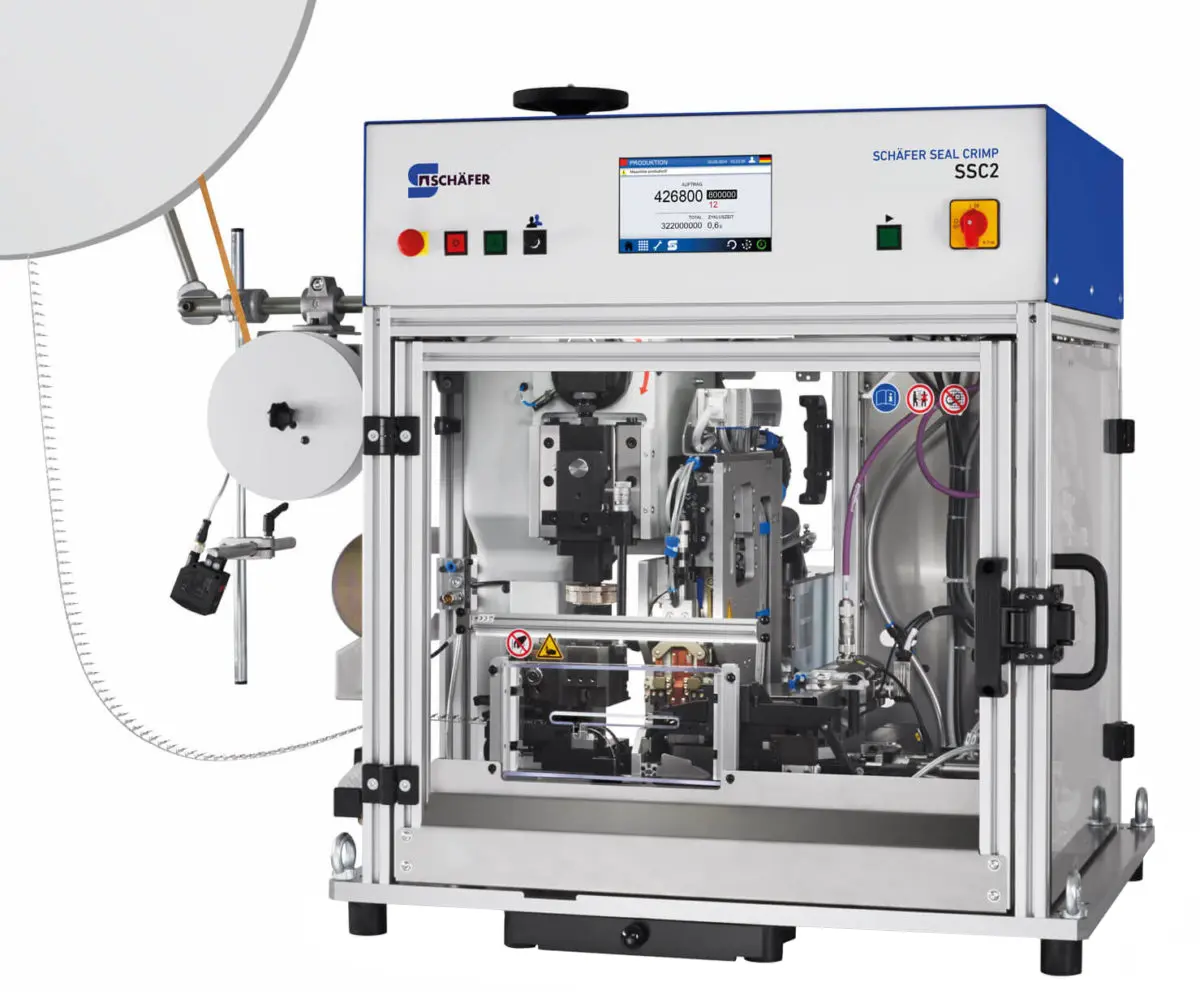
Specialised seal processing machines – such as those offered by CETEC Systems as part of complete assembly lines – address these problems structurally:
- Defined positioning: The seal is automatically pushed onto the cable at exactly the correct position, with tolerances in the range of tenths of a millimetre.
- Orientation verification: Camera systems or mechanical inspection stations detect twisted or missing seals before crimping.
- Seal-before-crimp verification: The machine checks whether the seal is correctly seated before the crimping operation is released. If the seal is missing, the machine stops.
- Material-appropriate feeding: Vibratory feeders, separators, and grippers are matched to the specific seal type – no mechanical stress on the component.
A single non-sealing connector on the exterior of a vehicle can lead to a warranty claim in the five-figure range. Investing in seal processing machines is quality assurance.
Manual vs. Automated Seal Processing – When to Use Which?
- Manual processing: Justifiable for very small quantities, prototypes, or when only one seal type is used in manageable numbers. Requires trained personnel and visual inspection.
- Semi-automatic solution: A seal feeding aid or simple seal machine supplements a manual crimp station. A good compromise for medium production runs.
- Fully automatic seal processing: Part of a complete assembly line. Cutting to length, stripping, seal application, and crimping in a single process step. Virtually mandatory for production runs of several hundred units per day or more.
What CETEC Systems Does for You
Seal processing is an area where machine selection and process consulting must go hand in hand. Not every machine suits every seal type, and not every production situation requires the fully automatic solution right away.
We analyse your current error rates, your seal type mix, and your production structure – and recommend the solution that reduces your scrap rate most effectively. Talk to our experts.